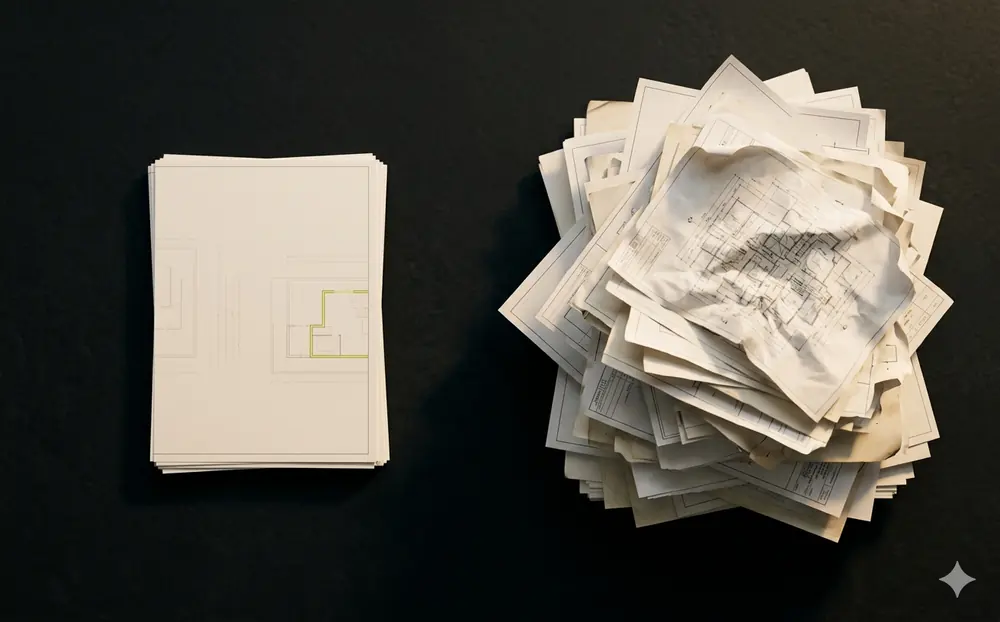
Every month, someone shows us a bargain-built product and asks what it would cost to "tidy up." The honest answer is usually: more than it would have cost to build it properly the first time.
This is not a hit piece on offshore developers or budget freelancers. Some of the best engineers we work with live a long way from your market and charge accordingly. The problem is not geography. The problem is what gets quietly cut to hit the lowest price.
What the lowest quote buys, and what it does not
A rock-bottom budget buys a fixed, small slice of hours — enough to wire together a few screens, a database, and a basic login. It does not buy the things you never see in a demo but feel within a year: real UX thinking, a proper design system, accounts and permissions, billing, reporting, error tracking, tests, accessibility, speed, and security. So none of it gets done.
The compounding cost
You ship. The product is rough but it works. You start selling. Then the cost starts compounding.
- Every new feature takes far longer than it should, because the foundation cannot carry it.
- Every new customer needs hours of manual setup, because no admin tools were ever built.
- Every outage drags on for days, because nothing was put in place to see what broke.
- When customers leave, you cannot say why, because nothing was ever measured.
- Every good developer you try to hire takes one look and walks away.
The cheapest engineer is rarely the most expensive part. The cheapest decision usually is.
What good costs
A production-grade first version — real foundations, accounts and billing, an admin area, error tracking, and documentation a future hire can actually start from — costs less than a couple of months of a single developer's salary. It feels like more upfront, until you notice it keeps paying you back for years instead of quietly billing you for the shortcuts. We scope it to where you actually are: an honest entry point for an early product, a fuller build when you are ready to scale.
When cheap is the right answer
Sometimes a quick, throwaway prototype is exactly right: you are testing one idea, you fully intend to discard the code, and you have the discipline to actually do it. We build those too. Just know that is what you are buying — a question answered, not a product to grow on.
The question to ask
Before you sign any build, ask one question: "What is not included that we will need within a year?" If the answer is "we will figure it out then," assume it will cost you several times what you are saving today — in money, time, and momentum.